BABASAHEB DR. BHIMRAO RAMJI AMBEDKAR
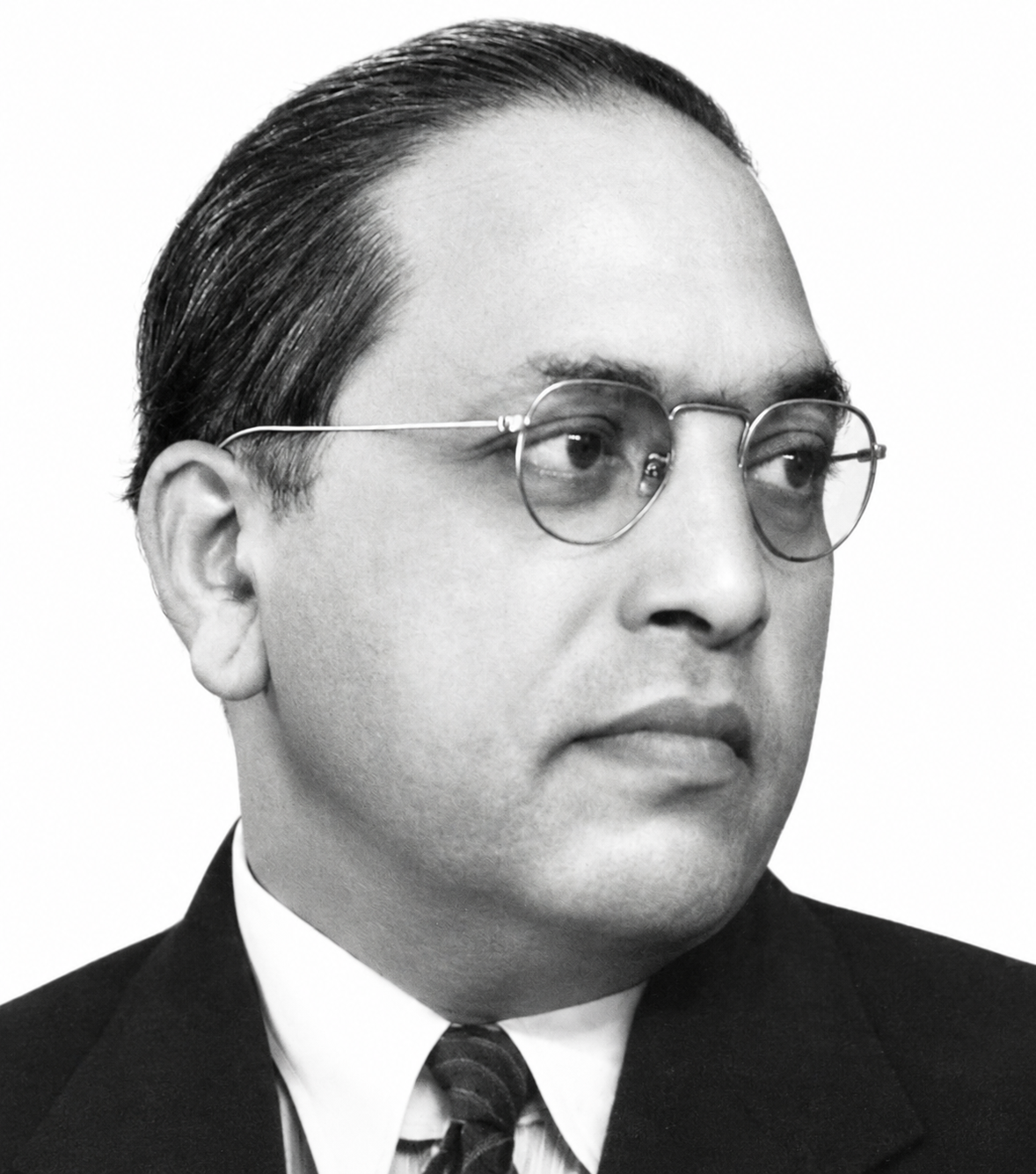
Architect of the Indian Constitution | Jurist | Economist | Social Reformer | Champion of Equality and Social Justice
Dr. Bhimrao Ramji Ambedkar (1891–1956) was one of the most influential figures in modern Indian history. A distinguished jurist, economist, constitutional thinker, scholar, political leader and social reformer, he dedicated his life to advancing human dignity, equality, education, democratic rights and social justice. The Government of India's Dr. Ambedkar Foundation describes him as a leading architect of the Constitution and notes his contributions across law, economics, sociology, education, public policy and democratic governance.
Early Life & Education
Born on 14 April 1891 at Mhow, in present-day Madhya Pradesh, Dr. Ambedkar grew up in an environment marked by caste-based discrimination. Despite the formidable social barriers of his time, he pursued education with extraordinary determination.
He graduated in Political Science and Economics from Bombay University and subsequently pursued higher studies at Columbia University in the United States. He later continued his studies in London, developing expertise in economics, law, political institutions and public affairs.
Dr. Ambedkar Writings
His intellectual development became the foundation for a lifetime of scholarship and public service.
A Life Devoted to Social Transformation
Dr. Ambedkar's public life was centred on the struggle against caste discrimination, social exclusion and inequality. He believed that political independence could not by itself create a truly democratic society unless citizens also enjoyed social equality, economic opportunity, individual liberty and human dignity. His work therefore extended beyond political representation to education, labour rights, economic policy, social reform and constitutional safeguards.
The Government of India records that he advocated democracy in social, economic and political life, placing particular emphasis on dignity, freedom and rights.
Political & Organisational Leadership
Dr. Ambedkar was not only a constitutional scholar but also an active political organiser and representative. He founded the Independent Labour Party in 1936 and later established the Scheduled Castes Federation in 1942 as an all-India political organisation. He also served on the Viceroy's Executive Council during 1942–1946 and was a member of the Constituent Assembly. National Archives of India
His political work sought to secure greater representation, rights and opportunities for communities that had historically faced social exclusion.
Role in the Making of the Indian Constitution
One of Dr. Ambedkar's most enduring contributions came through his work in the Constituent Assembly. He was elected to the Constituent Assembly and subsequently became Chairman of the Drafting Committee, which was constituted on 29 August 1947.
As Chairman, he played a central role in steering the draft Constitution through the Assembly's extensive deliberations. The Constitution was adopted on 26 November 1949 and came into force on 26 January 1950.
His constitutional vision emphasised: Equality before the law, Fundamental rights, Constitutional democracy, Representation, Social justice, Institutional accountability, Liberty and dignity.
The constitutional framework incorporated safeguards and provisions intended to advance social justice for historically disadvantaged communities.
First Law Minister of Independent India
Following India's independence in 1947, Dr. Ambedkar became Independent India's first Law Minister. He played an important role in the country's early legal and institutional development. He later resigned from the Union Cabinet following differences with the government concerning the Hindu Code Bill.
Advocate for Education, Labour & Economic Justice
Dr. Ambedkar's contribution extended well beyond constitution-making. As an economist and policy thinker, he wrote extensively on India's monetary system, agriculture, labour, economic development and public finance. His work also addressed the rights and welfare of workers and the broader economic conditions necessary for social progress.
He regarded education as a fundamental instrument of social advancement, particularly for communities historically denied equal educational opportunities. His intellectual contributions demonstrate the breadth of his public-policy thinking: he worked across economics, law, sociology, political science, education and social reform.
Vision of Democracy
For Babasaheb Ambedkar, democracy was not merely a system of elections or government. He envisioned a society in which liberty, equality and fraternity could operate together and where constitutional institutions would protect individual rights and maintain accountability.
His approach to social transformation was closely connected with constitutionalism, parliamentary democracy and the rule of law.
Buddhism & Final Years
On 14 October 1956, Dr. Ambedkar embraced Buddhism at Nagpur along with many of his followers. In the same year, he completed his final major work, The Buddha and His Dhamma. He passed away on 6 December 1956 in Delhi. In 1990, he was posthumously awarded the Bharat Ratna, India's highest civilian honour.
Legacy
Dr. B. R. Ambedkar's legacy extends across constitutional law, democratic governance, social reform, economics, education and the continuing pursuit of equality. His enduring principles include: Equality, Liberty, Fraternity, Justice, Human Dignity, Education, Constitutional Rights, Democratic Representation, Social & Economic Empowerment.
His life demonstrates how education, constitutional institutions and organised social action can become instruments for transforming society.
Babasaheb's Enduring Message
“Cultivation of mind should be the ultimate aim of human existence.”